HISTORY
Uguisudani Club, an Inn
That Appears in a Rampo Novel
—— Did Rampo himself come here, we wonder
First, allow us to quote a passage
from a novel by Edogawa Rampo.
In the daytime, a safe occasion offering itself, I met M at the “Tokiwa Ryokan” in Uguisudani. How taken M has become — I can see it plainly.
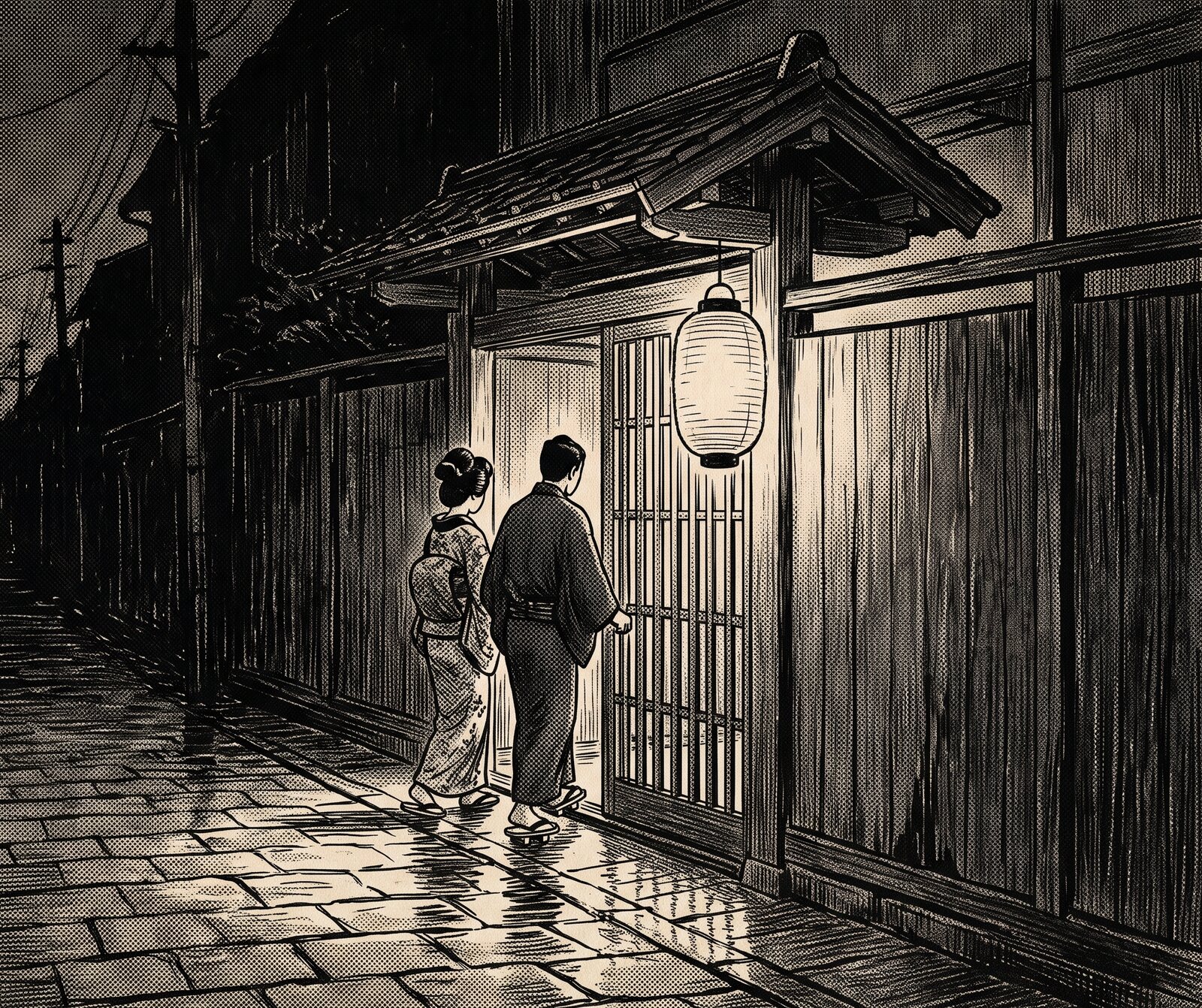
The Tokiwa Ryokan was real
Set down almost in passing, as the inn for a discreet meeting: “the Tokiwa Ryokan in Uguisudani.” An inn bearing that same name really did stand in Uguisudani at the time — the Uguisudani Club of today, then called the Tokiwa Ryokan, written 常きわ.
We opened here in Negishi in 1952 as the Tokiwa Ryokan, two years before the serialization of Kenin Gengi began. The novel writes the name 常盤; ours was written 常きわ. The characters differ, yet both are read Tokiwa. And in the Uguisudani of those years, no other inn bore the name Tokiwa.
The “Tokiwa Ryokan in Uguisudani” that Rampo set down was, surely, this inn. Whether he ever came here himself there is now no way to confirm. But the lamp burning in that passage was, without question, the one that burned in this place.
The history of Uguisudani Club
More than seventy years, under one name after another. In this same place, we have kept the lantern lit.
- 1952
Opened as the Tokiwa Ryokan (written 常きわ)
- 1954–55
Edogawa Rampo publishes Kenin Gengi;
the “Tokiwa Ryokan in Uguisudani” appears in the novel - 1965
Renamed Ryoso Tokiwa
- 1984
Renamed Hotel Valentine
- 2014
Renamed Uguisudani Club
- 2021
Uguisudani Club — new wing opened
About the novel Kenin Gengi
Kenin Gengi is a full-length detective novel by Edogawa Rampo. Its opening appeared in the November 1954 issue of Bessatsu Hoseki, after which it ran in the detective-fiction magazine Hoseki from the January through the October 1955 issue. Featuring the great detective Kogoro Akechi, it stands among the representative works of Rampo’s postwar years.
In 1956 it was nominated for the 9th Detective Writers Club of Japan Award. The story turns on the diary of one of its characters; the “October 15” passage quoted above is an entry from that diary.
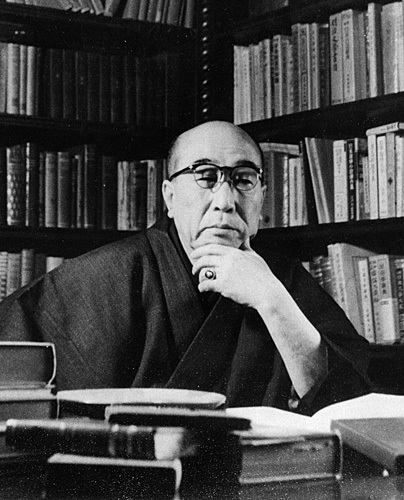
Edogawa Rampo, the writer
His pen name is a play on that of the American writer Edgar Allan Poe. Born Hirai Taro in Mie Prefecture in 1894, he made his debut in 1923 with “The Two-Sen Copper Coin” and went on to lay the foundations of detective and mystery fiction in Japan. He left many works still widely read today — among them the Fiend with Twenty Faces and Boy Detectives Club series and the stories The Human Chair and The Beast in the Shadows — and died in 1965.
From 1934 he lived in Ikebukuro, where the storehouse he used as a library — known as the “Phantom Castle” — still stands, preserved and opened to the public by Rikkyo University. Ikebukuro is only a few stops from Uguisudani on the Yamanote Line. Rampo served as the first president of the Detective Writers Club, forerunner of the Mystery Writers of Japan, and his name lives on in the Edogawa Rampo Prize for new writers.
His influence is still close at hand today. In the hugely popular manga Detective Conan, the alias the hero goes by — “Conan Edogawa” — joins Rampo’s own name to that of the British writer Arthur Conan Doyle. Rampo’s stories are still adapted again and again for film, television and the stage, and scarcely a bookshop in Japan is without them on its paperback shelves.
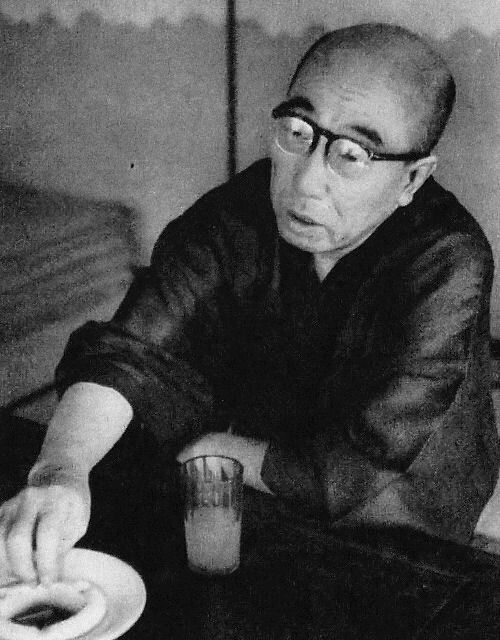
Edogawa Rampo, walking Uguisudani
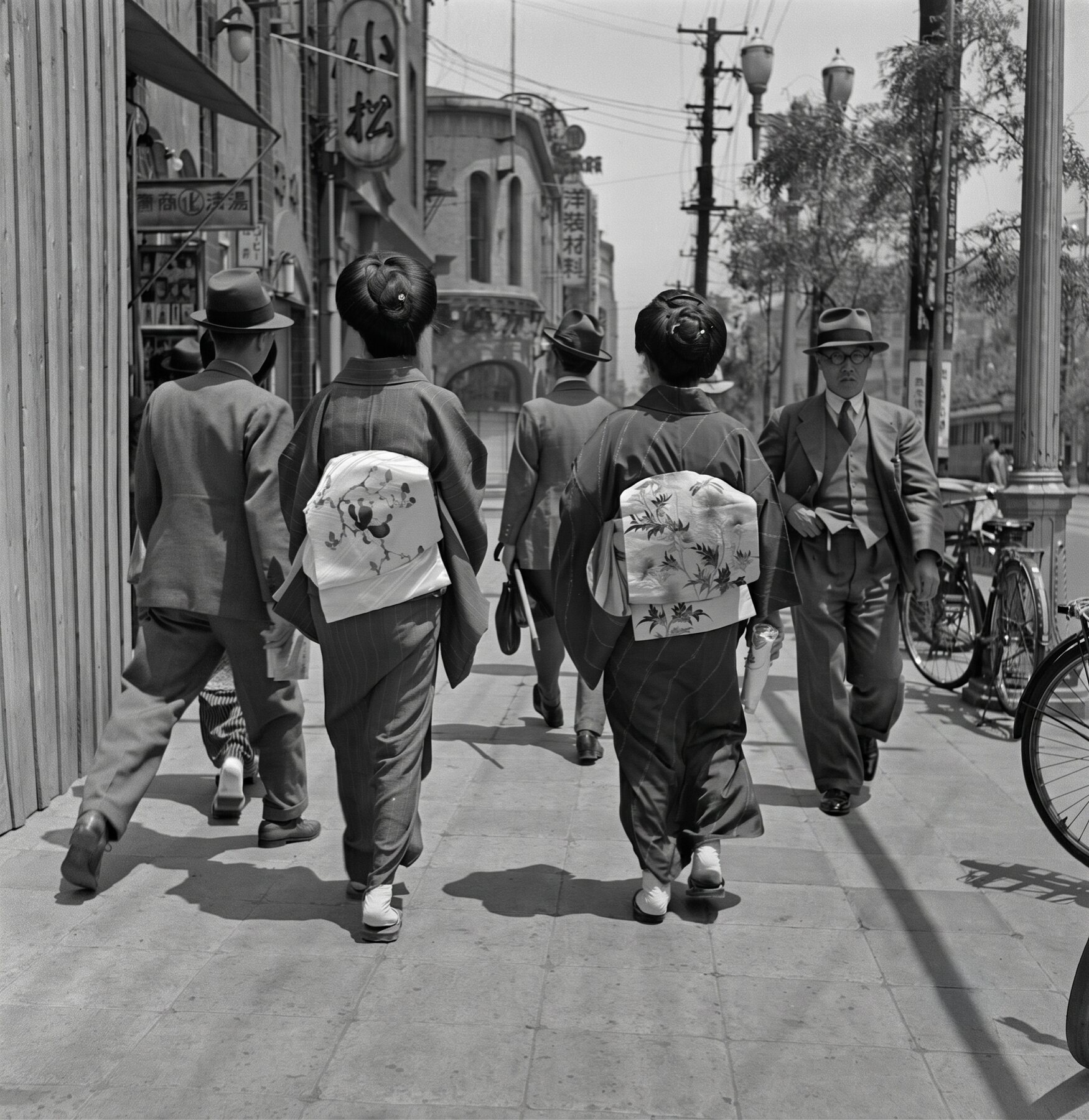
Kenin Gengi was not the first time Rampo wrote about this neighbourhood. In Inju (1928), the narrator rents an old house beside the Ogyo-no-Matsu pine in Negishi. In Kotō no Oni, serialized from the following year, a tented circus troupe pitched on a vacant lot near Uguisudani Station becomes part of the case. And in Yōchū (1933), a young man trails a suspect along the Kanasugi high street. A circus at Uguisudani, a sideshow tent at Kanasugi — having written the same ground twice, Rampo clearly knew this part of the city well.
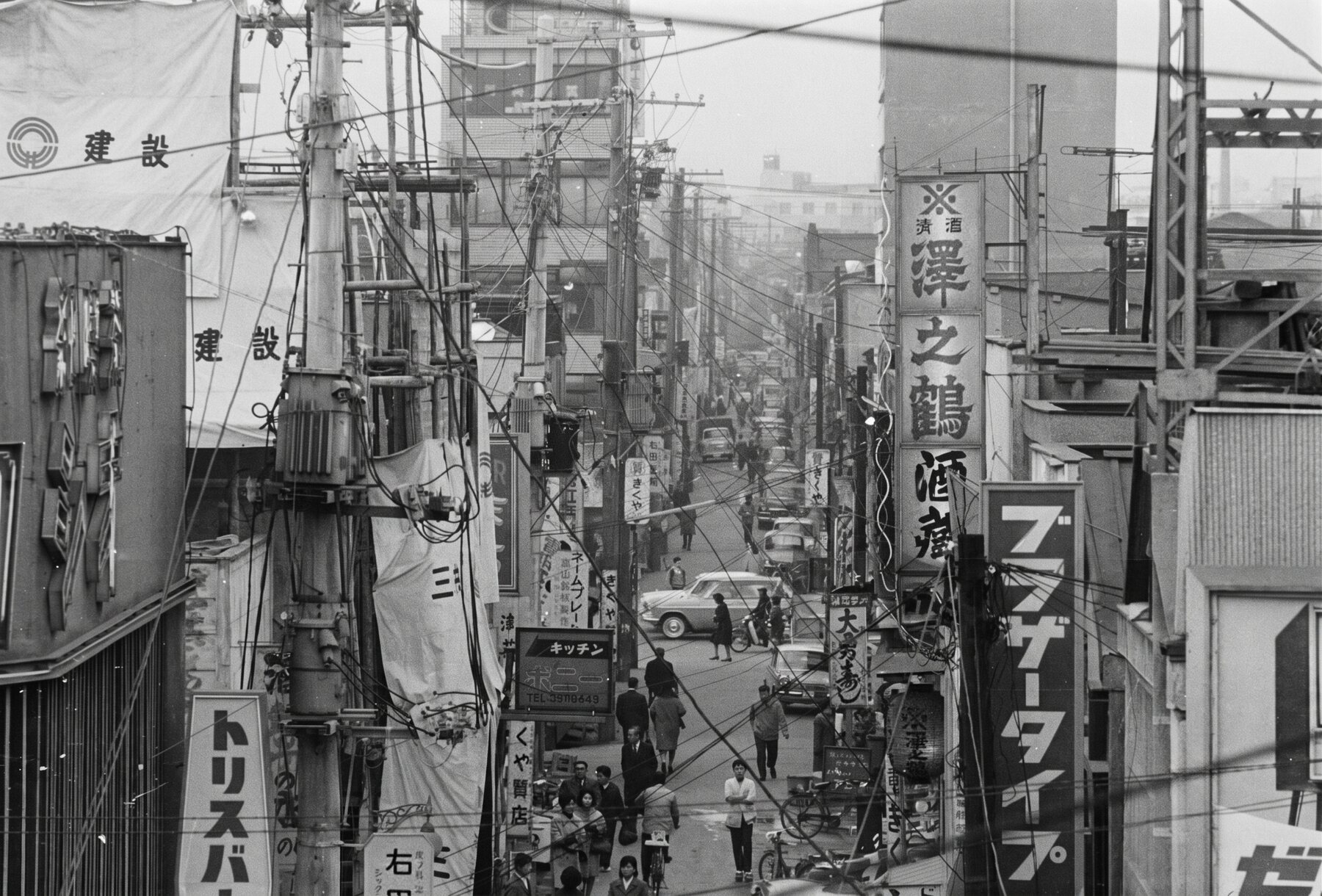
The Tokiwa Ryokan stood in the lanes of the Uguisudani that Rampo walked.
Under the names Ryoso Tokiwa, Hotel Valentine and Uguisudani Club, it has kept its lantern lit in the same place for more than seventy years.
To be a place where anyone can draw a quiet breath, unhurried and unbothered.
That much, at least, we have carried on unchanged since those days.
Note: the inn in the novel is written 常盤; our former name was written 常きわ. The characters differ, but both are read Tokiwa. The quotation follows Kenin Gengi (Kadokawa Horror Bunko); Inju, Kotō no Oni and Yōchū are cited from Aozora Bunko.